These students became startup founders in 8 weeks. Here’s what they learnt
JUN 29, 2026 | 7-MIN READ
Government officials will never ask you to transfer money or disclose bank log-in details over a phone call.
Call the 24/7 ScamShield Helpline at 1799 if you are unsure if something is a scam.

JUN 30, 2025 | 5-MIN READ
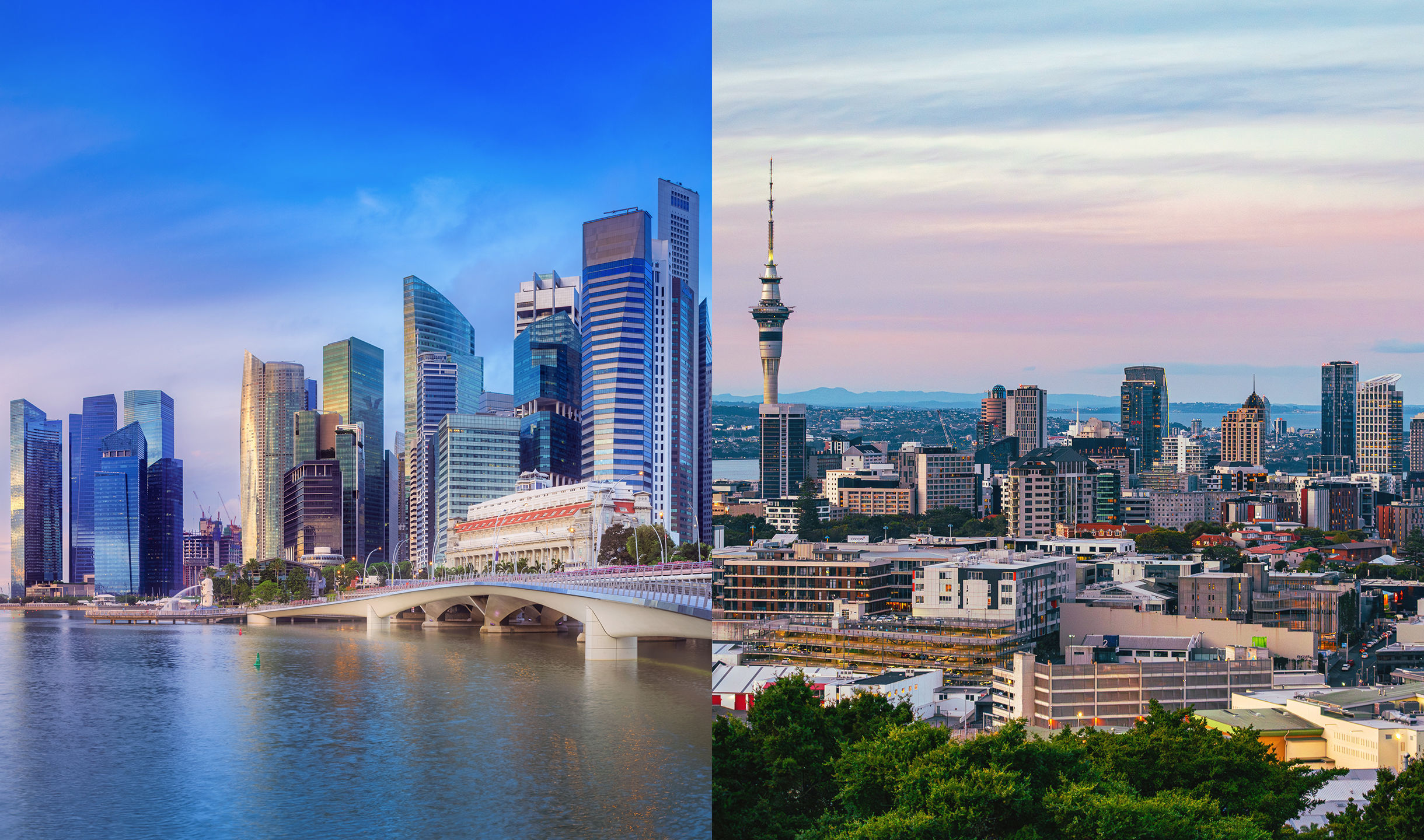
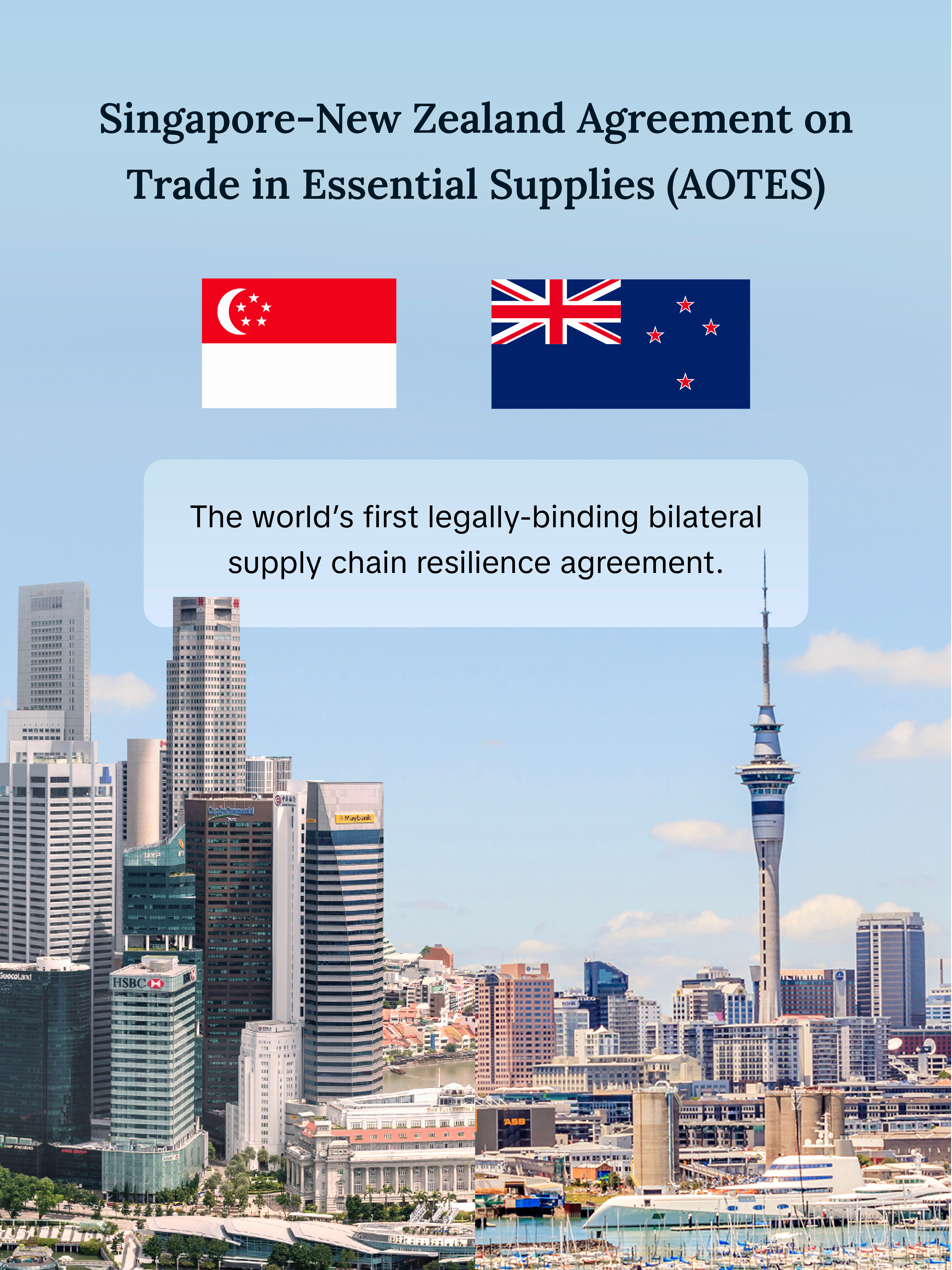
As supply chains increasingly come under pressure from geopolitical tensions and as countries veer towards inward-looking economic and trade strategies, Singapore and New Zealand have signed the world's first legally binding bilateral agreement to keep trade in essential supplies flowing especially during times of crises.
The COVID-19 pandemic exposed the fragility of global supply chains – particularly the vulnerability of open and well-connected economies – to abrupt external shocks and the need to reinforce international cooperation on supply chain resilience. Everyday essentials people had long assumed would be readily available suddenly became harder to purchase due to cross-border disruptions. Delays became widespread, and some countries introduced restrictions to protect their own needs. For businesses and consumers, it was no longer about where goods came from, but whether they would arrive on time, or at all.
The disruption laid bare a hard truth: in a crisis, reliability depends as much on policy decisions as it does on physical supply.
Singapore and New Zealand experienced this firsthand. When global supply chains buckled during COVID-19, the two countries launched the Singapore-New Zealand Air Freight Project (SNAP) that kept essential food and medical supplies moving. The experience planted the seed for something more lasting: a shared commitment to building resilient supply chains that hold, even during times of disruption.
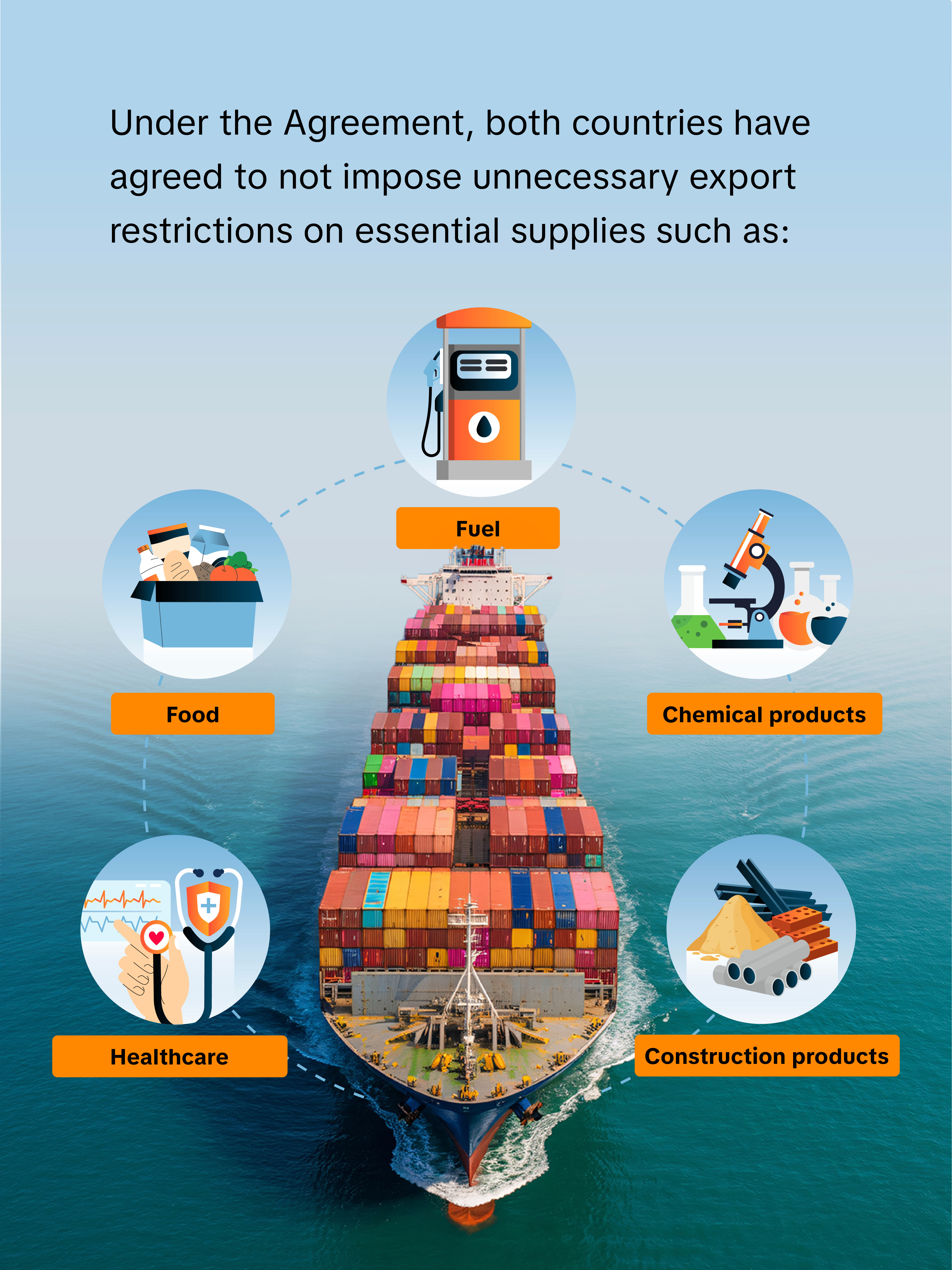
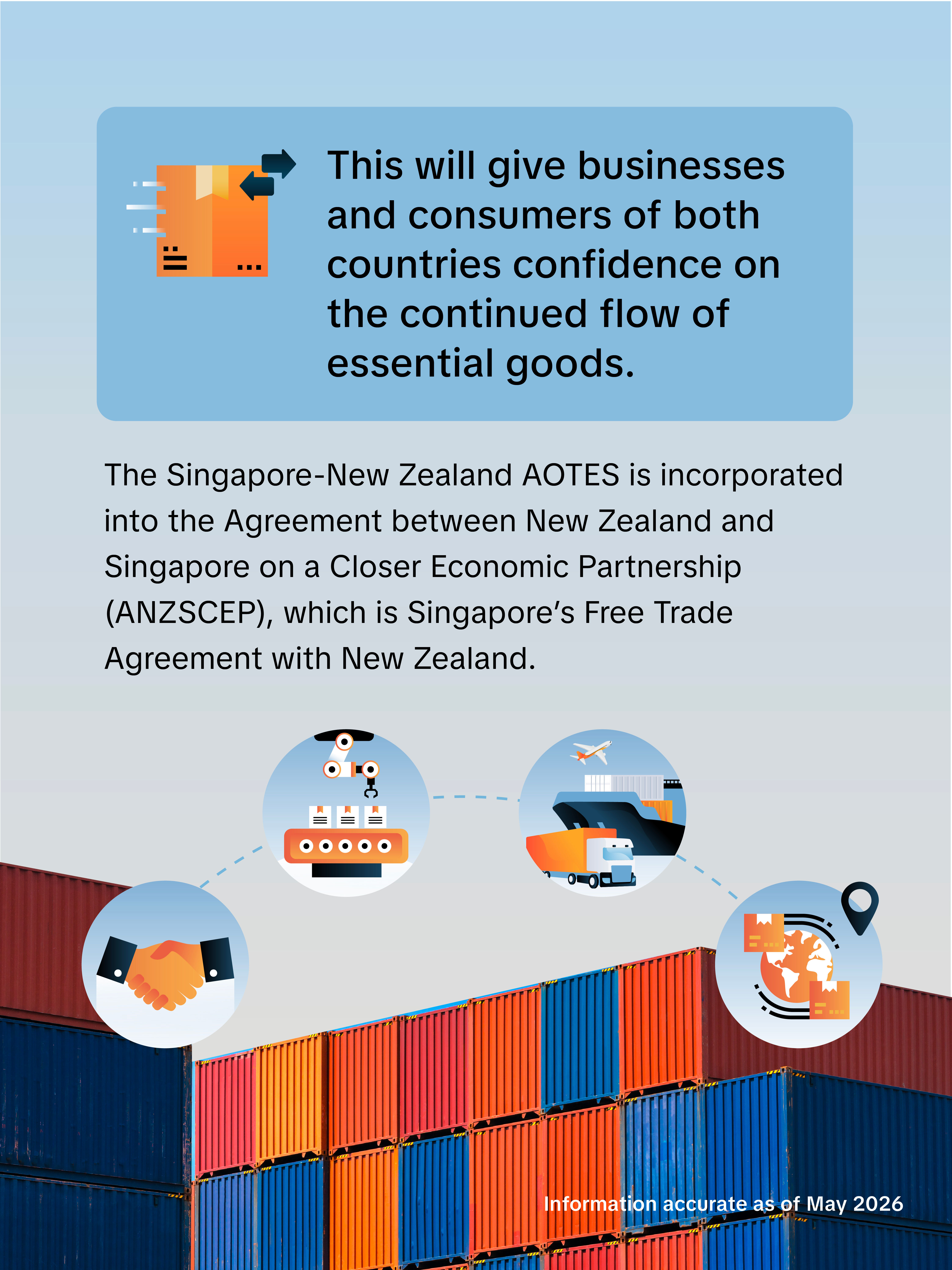
Building on that cooperation, Singapore and New Zealand signed the Agreement on Trade in Essential Supplies (AOTES) on 4 May 2026. The Agreement focuses on keeping essential supplies – including food, fuel, healthcare, chemical and construction products – moving across our borders even during periods of disruption. This way, we ensure that our channels and doors remain open while allowing the mechanisms of the free market to guide the flow of goods between parties.
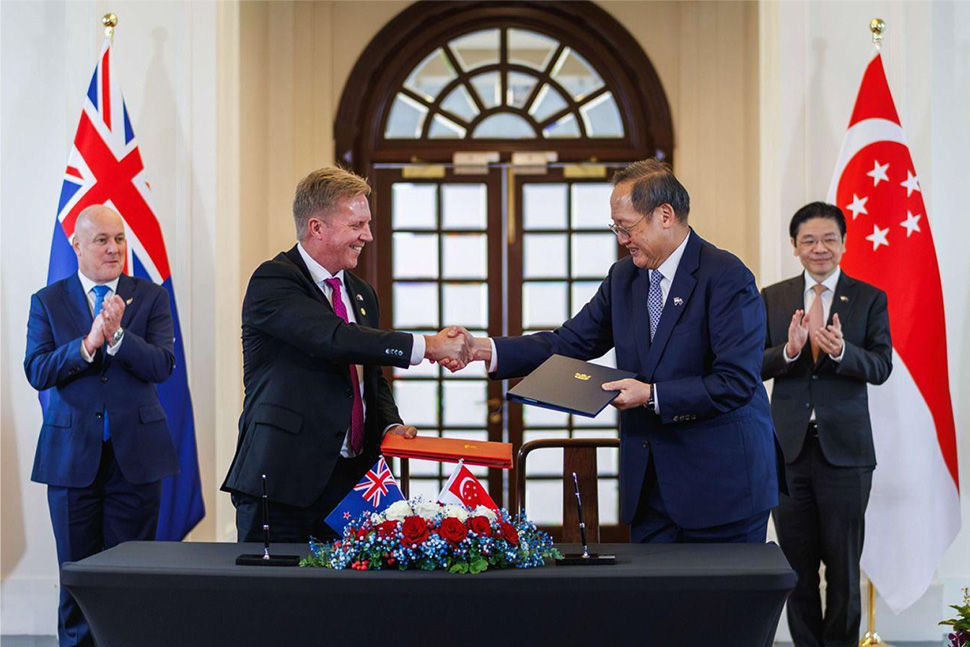
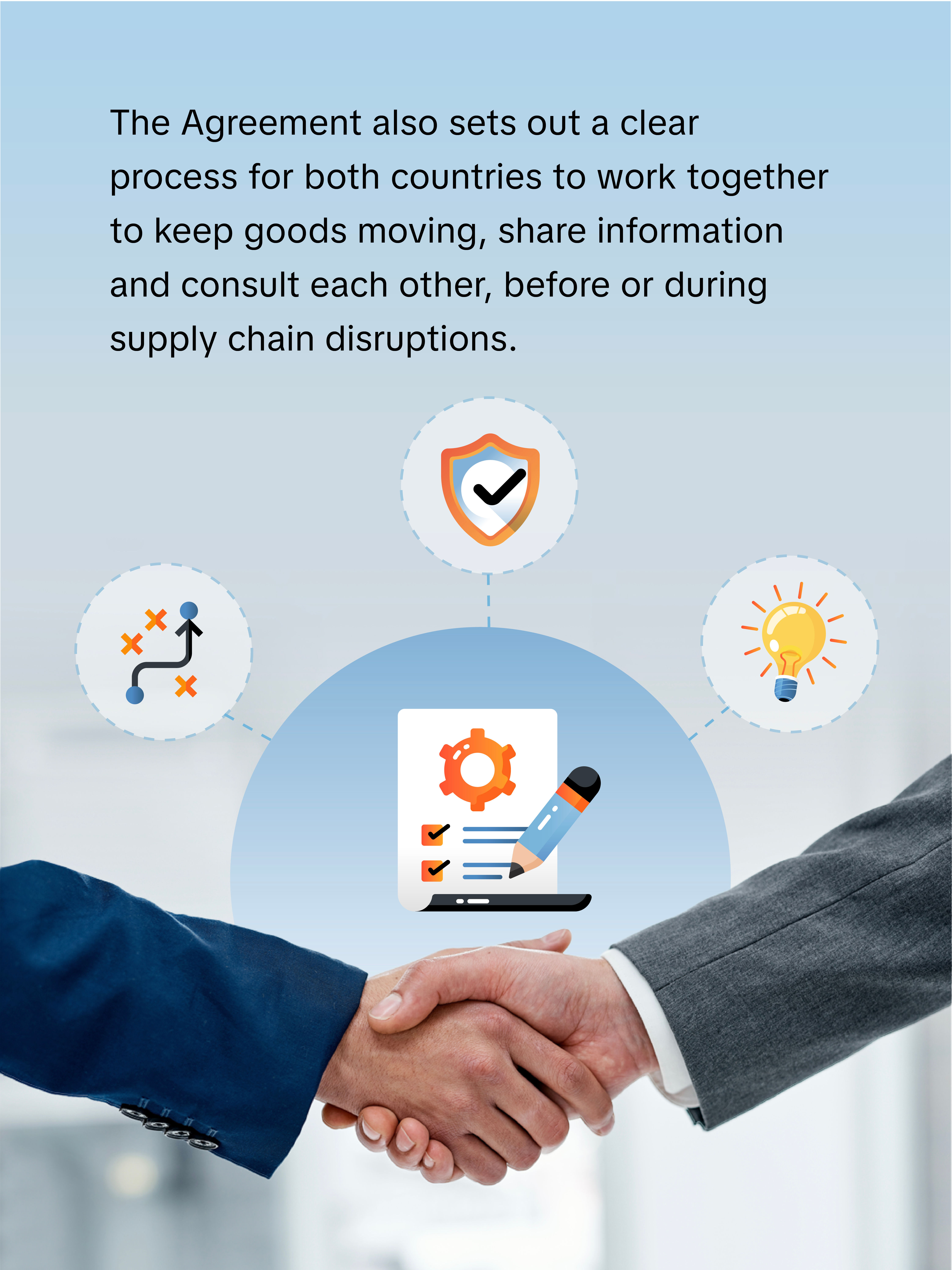
Under the Agreement, both countries have agreed not to impose unnecessary export restrictions on essential supplies. It also establishes a framework for the timely sharing of information, consultative mechanisms between the countries, and coordinated responses before or during disruptions.
While these may seem straightforward, disruptions are rarely confined to a single location or product. A port closure, a conflict, a sudden policy change could each set off a chain reaction that catches businesses and consumers off guard. Timely sharing of early warning signals can give countries and companies valuable time to identify emerging risks, prepare for contingencies and respond more effectively.
Trade agreements have long focused on opening access to markets and reducing barriers to trade. The AOTES adds a new dimension, reflecting a growing recognition that the continued flow of essential supplies during a crisis is equally important.
In this more uncertain environment, trusted partners matter more than ever.
Prime Minister and Minister for Finance Lawrence Wong at the Singapore-New Zealand Leadership Forum, May 2026
Today, governments and businesses operate in a complex and uncertain global environment where external shocks can have immediate and far-reaching impacts across markets and supply chains. While no country can prevent every disruption, how countries prepare for and respond to them is within their control. Closer coordination and stronger partnerships among like-minded and trusted partners can reduce uncertainty and support stable trade flows through aligned expectations and transparent communication.
This is precisely what agreements like the AOTES are built for: not just to keep trade flowing, but also to strengthen resilience collectively and ensure that countries and businesses are better equipped to respond to and weather through disruptions.